Advanced shoulder and elbow care.
Dr. Knudsen treats the full range of shoulder and elbow conditions, with particular expertise in shoulder replacement, revision surgery, complex rotator cuff tears, instability, fractures, and sports-related elbow injuries. Every plan begins with a precise diagnosis, a clear explanation of the options, and a treatment strategy built around the patient's goals.
Start with the problem you need solved.
These pathways bring together the conditions and procedures most often involved in major surgical decisions, failed prior treatment, recent injuries, and complex reconstruction.
Shoulder Replacement
Compare anatomic, reverse, and selected hemiarthroplasty options, with CT-based 3D planning for every reconstruction.
Explore pathway →Painful or Failed Prior Surgery
Evaluation after shoulder replacement, rotator cuff repair, stabilization, fracture fixation, or prior elbow surgery.
Explore pathway →Rotator Cuff Repair & Reconstruction
Care for repairable tears, massive or irreparable tears, and failed prior repairs.
Explore pathway →Instability & Revision Stabilization
Treatment for recurrent dislocation, bone loss, and failed Bankart or Latarjet surgery.
Explore pathway →Fractures & Acute Tendon Injuries
Prompt pathways for proximal humerus, clavicle, and elbow fractures and distal biceps or triceps ruptures.
Explore pathway →Complex Second Opinions
A fresh review of imaging, prior operations, treatment choices, and realistic outcomes.
Explore pathway →Patient-specific planning for every shoulder replacement.
Every shoulder replacement performed by Dr. Knudsen begins with a preoperative CT scan and three-dimensional computer templating. This allows him to study each patient's bone shape, wear pattern, deformity, and remaining bone stock; compare implant designs and sizes; and plan component position, alignment, and fixation before surgery.
He also uses augmented- and mixed-reality technology to help translate the individualized plan into the operating room. These technologies support surgical precision and customization, but they do not replace clinical judgment, experience, or careful execution.
Explore Shoulder Replacement Planning →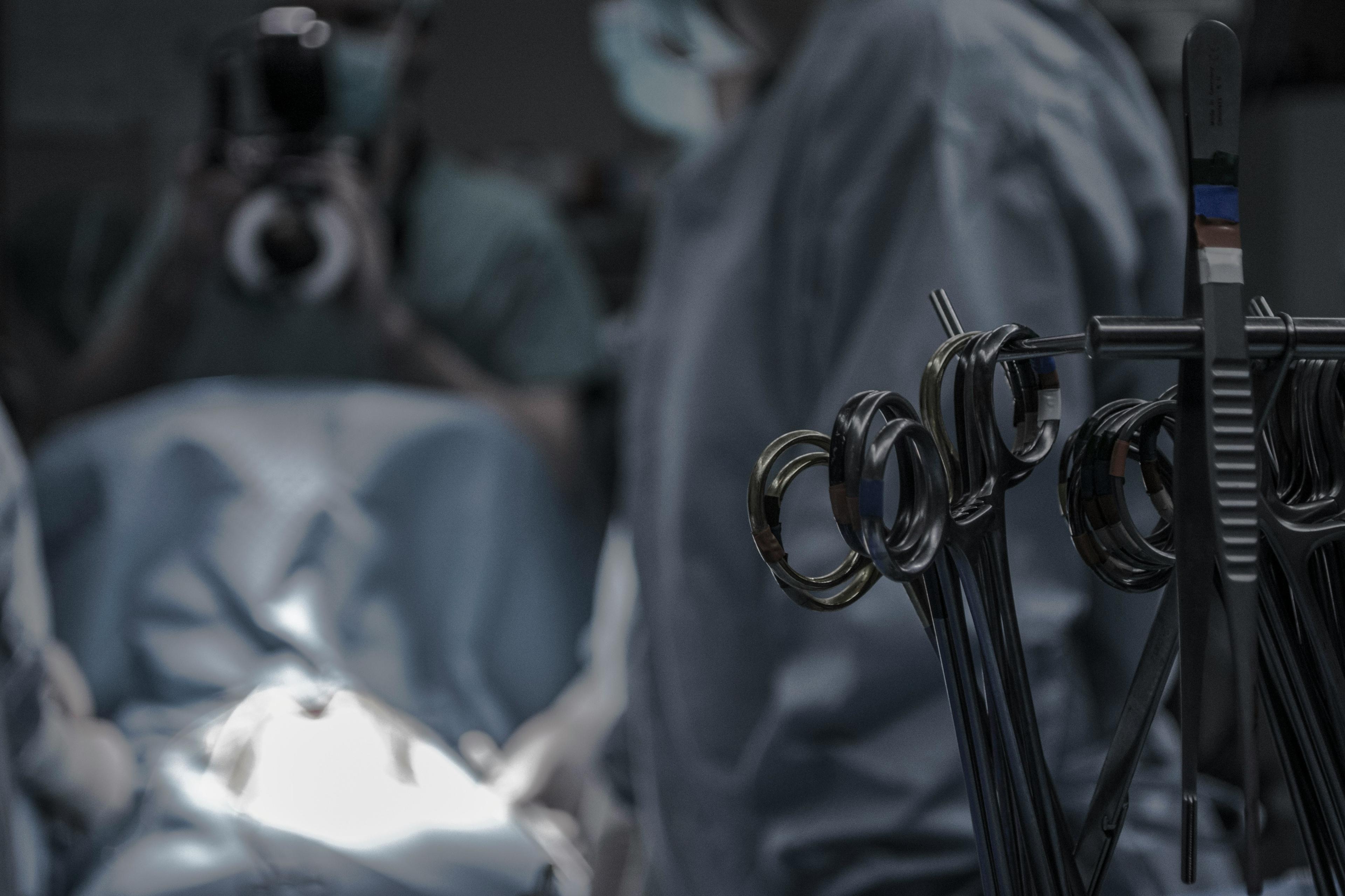
Patient Experience
“My shoulder was in very bad shape. The joint required reconstruction, and my rotator cuff was totally useless. After surgery and several months of physical therapy, I am back to normal daily function and have no pain. I am so grateful that I found the right surgeon.”
Patient following complex reverse shoulder replacement | Google review
These testimonials describe individual patient experiences. Treatment recommendations, recovery, and outcomes vary by patient.
Not sure where to start?
Answer a few questions about where it hurts, how it began, and whether you have had prior surgery. We will show the educational pages that may be most relevant and the right appointment pathway. This tool is not a diagnosis.
Start the Symptom Pathway →The complete clinical library.
All 29 conditions and procedures Dr. Knudsen treats, grouped by clinical category — from replacement and revision surgery to trauma, tendon injuries, and complex care.
Shoulder Replacement, Arthritis & Revision
Anatomic, reverse, and revision reconstruction for arthritis, cuff failure, and prior implant problems.
Shoulder replacement can relieve advanced pain and restore useful function when arthritis, rotator cuff failure, fracture, osteonecrosis, or prior surgery has permanently damaged the joint.
Pain after shoulder replacement is a symptom, not a diagnosis.
Severe glenoid deformity or bone loss can fundamentally change how a shoulder is reconstructed. It may occur with advanced arthritis, recurrent instability, a failed shoulder replacement, fracture, or previous surgery. Successful treatment begins with understanding why bone has been lost, how much usable bone remains, and which reconstruction will best restore stability, fixation, and function.
Reverse shoulder replacement is designed for shoulders that cannot reliably function with a traditional anatomic replacement.
Anatomic total shoulder replacement replaces the damaged ball-and-socket surfaces while preserving the shoulder's natural orientation.
Shoulder arthritis develops when the smooth cartilage covering the ball-and-socket joint becomes damaged or wears away.
Shoulder osteonecrosis, also called avascular necrosis, occurs when the blood supply to part of the humeral head is disrupted.
Rotator Cuff & Biceps
Repair, reconstruction, and revision for the tendons that lift, rotate, and stabilize the shoulder.
A rotator cuff tear involves one or more tendons that help lift, rotate, and stabilize the shoulder.
A massive rotator cuff tear and an irreparable tear are not the same.
Persistent symptoms after rotator cuff surgery do not always mean the tendon has failed, and an abnormal MRI does not automatically mean another operation is needed.
The long head of the biceps tendon travels through the shoulder joint and is vulnerable to inflammation, degeneration, partial tearing, and complete rupture.
Rotator cuff tendinitis, tendinopathy, and subacromial bursitis describe pain arising from the rotator cuff tendons and the bursa that helps them glide.
Shoulder Instability, Labrum & Stiffness
First-time and recurrent dislocation, labral injury, and progressive stiffness.
Shoulder instability occurs when the humeral head slips partly or completely out of the socket.
Recurrent instability after shoulder surgery requires a new diagnosis, not automatic repetition of the original procedure.
A SLAP tear affects the upper portion of the shoulder labrum near the attachment of the long head of the biceps tendon.
Frozen shoulder, or adhesive capsulitis, causes progressive pain and loss of both active and passive shoulder motion.
Shoulder Trauma
Fractures and ligament injuries around the shoulder girdle following a fall or collision.
A proximal humerus fracture is a break near the shoulder joint.
A clavicle fracture is a break in the collarbone, commonly caused by a fall directly onto the shoulder, cycling accident, collision, or contact-sports injury.
An AC joint separation is an injury to the ligaments connecting the clavicle to the acromion and coracoid.
Elbow Tendon & Sports Injuries
Acute tendon rupture and overuse tendon conditions in throwing athletes and active adults.
A distal biceps tendon rupture occurs when the biceps tendon tears from its attachment at the elbow.
A distal triceps tendon rupture is an uncommon injury in which the tendon that straightens the elbow tears from the olecranon.
The ulnar collateral ligament, or UCL, is the primary stabilizer on the inner side of the elbow during overhead throwing.
Tennis elbow, or lateral epicondylitis, is degenerative tendon pain at the outside of the elbow.
Golfer's elbow, or medial epicondylitis, is degenerative tendon pain where the wrist-flexor and forearm-pronator muscles attach to the inner elbow.
Elbow Trauma, Reconstruction & Nerve
Complex fractures, chronic instability, arthritis, and nerve compression at the elbow.
Elbow fractures can involve the distal humerus, radial head or neck, coronoid, olecranon, or several structures at once.
Elbow stability depends on the precise shape of the bones, the lateral and medial collateral ligaments, and the muscles that cross the joint.
Elbow arthritis and elbow stiffness often occur together, but they are not the same problem.
Total elbow replacement replaces the damaged surfaces of the humerus and ulna with linked or unlinked implant components.
Cubital tunnel syndrome occurs when the ulnar nerve is compressed or irritated at the elbow.
Complex Care
Independent review for the most difficult shoulder and elbow decisions.
A second opinion should do more than repeat the first diagnosis.
Dr. Knudsen provides detailed review of imaging, prior operations, treatment options, and realistic outcomes for patients facing shoulder replacement, revision surgery, recurrent instability, failed rotator cuff repair, complex fractures, or another difficult decision.
Patient Experience
“I sustained very bad injuries in a bike accident, and Dr. Knudsen was so nuanced in his care. When others were saying I should get surgery, Dr. Knudsen was more wary of that approach. A year later, there is no question that Dr. Knudsen's approach was the right one.”
Trauma second-opinion patient | Google review
Complex surgical referrals and time-sensitive injuries
Dr. Knudsen welcomes referrals for shoulder replacement, failed prior surgery, revision reconstruction, complex rotator cuff tears, instability with bone loss, fractures, distal biceps or triceps ruptures, UCL injuries, and difficult elbow reconstruction.
Patient Experience
“He was quick to respond to concerns and explained everything before and after surgery in detail and in a way that was easy to understand. His surgical team and staff were awesome as well.”
Surgical patient referred by another orthopedic surgeon | Google review
Operative reports, prior imaging, implant information, and a concise treatment timeline are helpful when available.
Refer a Patient →Frequently Asked Questions
Frequently Asked QuestionsHow do I know whether I need shoulder or elbow surgery?
Surgery is considered when the diagnosis is clear, reasonable nonsurgical treatment has been tried (or isn't appropriate for an acute injury), and the expected benefit outweighs the risks and recovery for your goals. Dr. Knudsen reviews your history, examination, and imaging together before recommending a surgical or nonsurgical path.
Should I bring my MRI, CT scan, or prior operative report?
Yes. Bring the actual imaging studies, not only the written report, along with any prior operative reports, implant information, and a brief timeline of your symptoms and treatment. This is especially helpful for revision surgery and complex second opinions.
What is the difference between anatomic and reverse shoulder replacement?
Anatomic replacement preserves the shoulder's natural ball-and-socket orientation and is generally used when the rotator cuff still functions well. Reverse replacement changes the joint's mechanics so the deltoid can power more of the lifting motion, and is often used for irreparable cuff tears, severe bone loss, or a failed prior replacement.
More on shoulder replacement options →Can Dr. Knudsen evaluate pain after a previous shoulder or elbow operation?
Yes. Evaluating a painful or failed prior surgery is a core part of the practice, including failed rotator cuff repair, failed stabilization, painful shoulder replacement, and elbow fracture fixation that has not healed as expected.
More on complex second opinions →Which injuries should be evaluated promptly?
Recent fractures, dislocations, distal biceps or triceps ruptures, and sudden new weakness after an injury should be evaluated promptly, since earlier treatment can affect repair options and outcomes.
How do I request a complex second opinion?
Contact the office and let the team know you are requesting a second opinion. Arranging transfer of your actual imaging, along with any operative reports and implant information, helps make the consultation as productive as possible.
Learn more about complex second opinions →