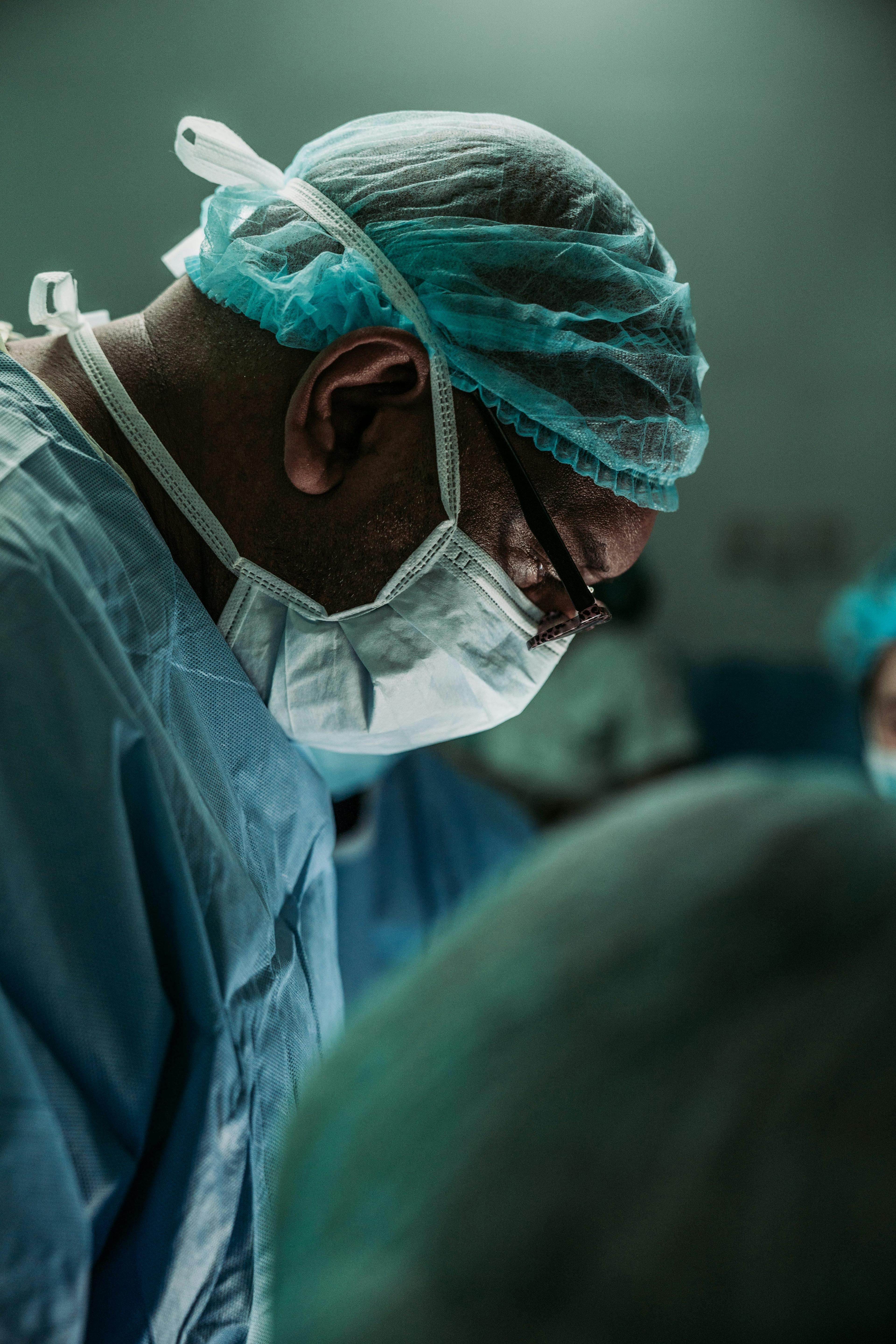
Revision Shoulder Stabilization
Recurrent instability after shoulder surgery requires a new diagnosis, not automatic repetition of the original procedure.
Why stabilization surgery can fail
A shoulder may become unstable again after a new injury, incomplete healing, stretching of the capsule, poor tissue quality, progressive glenoid bone loss, an engaging Hill-Sachs defect, or failure to address posterior or multidirectional instability. After a Latarjet or bone-block procedure, recurrent symptoms may reflect graft malposition, resorption, nonunion, fracture, hardware irritation, or residual soft-tissue instability. Pain after stabilization is not always recurrent instability. Stiffness, arthritis, rotator cuff disease, nerve problems, and painful hardware must also be considered.
Revision evaluation
The evaluation includes the original instability mechanism, number and direction of recurrent episodes, positions that create apprehension, and the demands of sport or work. Examination assesses direction of laxity, generalized hypermobility, strength, motion, and neurologic function. X-rays evaluate alignment, hardware, arthritis, and bone loss. MRI assesses the labrum, capsule, rotator cuff, and cartilage. Three-dimensional CT is often essential for quantifying glenoid and humeral-head defects and evaluating a prior graft or coracoid transfer. Operative reports and arthroscopic images are especially helpful.
Revision after failed soft-tissue repair
A revision Bankart repair or capsular shift may be appropriate when glenoid bone loss is minimal, tissue quality is adequate, and the original failure mechanism can be corrected. Remplissage may be added for a humeral-head defect that contributes to engagement. When bone loss is clinically important, repeating a soft-tissue repair alone may be unreliable. A Latarjet or another bone-restoring procedure may be recommended based on the amount and location of bone loss, sport, prior surgery, and remaining anatomy.
Revision after failed Latarjet or bone-block surgery
Failure after Latarjet surgery requires detailed assessment of graft position, healing, remaining glenoid bone, hardware, arthritis, and soft tissues. Treatment may include hardware removal, soft-tissue stabilization, revision or repositioning of the graft, or reconstruction with a different source of bone. These procedures are technically demanding because prior surgery alters the anatomy and places nerves and blood vessels near the operative field. The plan must include both the intended reconstruction and alternatives for unexpected bone or tissue deficiencies.
Recovery and expectations
Rehabilitation after revision stabilization is deliberate. Repaired capsule, labrum, bone graft, and other reconstructed tissues must heal before the shoulder is exposed to contact, throwing, heavy work, or high-risk positions. Revision surgery can improve stability and confidence, but recurrent instability, stiffness, loss of rotation, arthritis, nerve injury, graft or hardware complications, and additional surgery remain possible. The goal is a stable shoulder with the best functional balance the remaining anatomy can support.
Selected References
- Lau BC, et al. Outcomes After Revision Anterior Shoulder Stabilization: A Systematic Review. Orthop J Sports Med. 2020;8(5):2325967120922571.
- Lau BC, et al. Return to Play After Revision Anterior Shoulder Stabilization: A Systematic Review. Orthop J Sports Med. 2021;9(3):2325967120982059.
- Arenas-Miquelez A, Barco R, Cabo Cabo FJ, Hachem AI. Management of bone loss in anterior shoulder instability. Bone Joint J. 2024;106-B(10):1100-1110.
- Obana KK, Chen AZ, Rondon AJ, Wong TT, Jobin CM, Levine WN, Knudsen ML. Inter-rater reliability in calculating glenoid bone loss among orthopedic surgeons and musculoskeletal radiologists: how much do we agree? JSES Int. 2025;9(3):603-606.
- Luzzi AJ, Boddapati V, Rogalski BL, Knudsen ML, Levine WN, Jobin CM. Graft Resorption After Posterior Distal Tibial Allograft Augmentation for Posterior Shoulder Instability: A Case Report. JBJS Case Connect. 2024;14(1).
This information is educational and is not a substitute for an individualized medical evaluation. Written and medically reviewed by Michael L. Knudsen, MD | Last reviewed: July 2026
Request a Revision Instability Consultation
Multiple locations across Westchester.
Or call (212) 305-4565